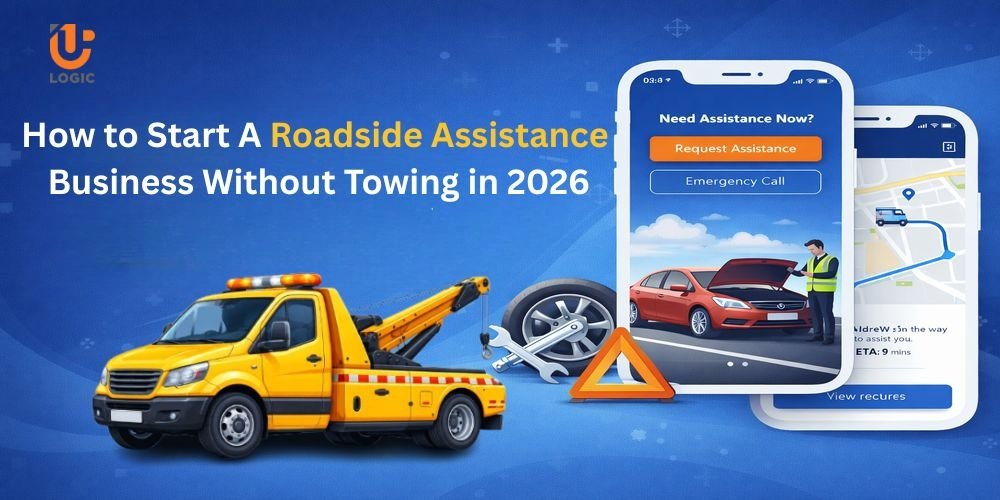
Being struck on the road is never a pleasant experience for daily commuters and long-distance travelers. The reason may be tire repair, battery jumpstart, or losing a car key. It can be the exact stop where you can begin your entrepreneurship journey in 2026. The roadside breakdown numbers are too high and require expert assistance. The roadside service segment without towing shows up to 70.6, making it the right time to seek guidance on how to start a roadside assistance business.
The modern roadside assistance business is lucrative, with a revenue share of USD 6000.6 million in 2024 in the US market. Starting your own roadside assistance business in regions like Texas, Florida, and other cities is a strategic way to build a strong base for recurring revenue.
This guide is your roadmap to becoming the hero in someone’s roadside emergency while building a successful roadside assistance business in 2026. Buckle up, entrepreneurs, because we’re about to show you how to tap into this thriving market.
What is A Roadside Assistance Business Without Towing?
A roadside assistance business provides support services when a vehicle is stranded on the road and makes a profit out of the minor fixes and fuel delivery. The business renders vehicle recovery assistance to help customers’ vehicles get moving again. You can charge a service fee or offer subscriptions to generate revenue.
Nowadays, vehicles are getting more complex, and, let’s be honest, sometimes we forget to check that pesky tire pressure. Even a small, unnoticed error can make you feel helpless at the point of breakdown. You may even need towing assistance for transporting your vehicle. All these factors create the need for roadside assistance businesses.
Roadside Assistance Industry Forecast & Trends
People are increasingly reliant on their smartphones, and that’s where online business comes in. On-demand roadside assistance apps are revolutionizing the industry, offering a convenient and stress-free solution for stranded drivers.The market is skyrocketing due to aging vehicles, smartphone adoption, and surging demand for convenience and technology.
Grand View Research projects the US roadside assistance services market to reach USD 8,082.4 million by 2030. The growth rate stands at a CAGR of 5.2% from 2025 to 2030. So, entrepreneurs, this is the right time to step into business. If you need help starting an online business, continue reading.
5 Roadside Assistance Business Services Without Towing
Roadside assistance is a profitable prospect for small businesses in the thriving USA market. With limited funds, they can grow their customer base by representing the 5 best roadside assistance businesses in their service plans. Without owning a towing vehicle, you can offer the following vehicle recovery services and expand cash flow.
Battery Jumpstart
Start the engine of the car with a dead or a run-down battery using portable jump packs. Service providers check the old battery and install a new one that matches the vehicle’s specifications.
Key Lockout Assistance
Unlock vehicles using specialized tools to help spark the ignition. Lockout services are gaining traction in the US market due to the flooded passenger car segment.
Emergency Fuel Delivery
Offer doorstep fuel delivery to help vehicles get back on the road. The North American market shows a significant growth potential for entrepreneurs who offer on-demand refuelling.
Minor Mechanical Repairs
Take steps to fix electrical or mechanical issues that prevent the vehicle from starting. Rising vehicle age, weather conditions, and rising insurance adoption drive demand for the roadside assistance service.
Flat Tire Service
Either replace the tire or repair tubeless tires for punctures and other damage. As a top reason for service calls, this service can help you place a strong foothold in the on-demand service market.
Roadside Assistance Business Plan
Roadside assistance startups require a solid business plan to identify local demand, define core services, set up pricing, outline legal procedures, and develop marketing strategies. Develop a comprehensive business plan outlining your company’s goals, target audience, marketing strategy, financial projections, and operational structure.
The structured process gives a clear direction and guides entrepreneurs in every step of their business journey.
- Executive Summary: State your mission and define target groups like speedy assistance to stranded motorists. The service coverage is within local commuters and commercial fleet managers
- Market Analysis: Delve into the analysis of local competitors, region-wise demand, and market trends. For instance, the winning factor can be rapid response times and dedicated technical support.
- Define Core Services: A well-defined service list offers a precision that helps with funding, equipment purchasing, and technology adoption. In the US, majorly EV battery charging and lockout services have elevated profit margins for firms like AAA and Agero.
- Invest in Technology: App-based systems are becoming a necessity to cater to modern user demands. Essential features include real-time tracking, digital payments, service requests, and ratings systems.
- Set Up Operations: Specify your staffing needs, the process you intend to follow, and set up equipment to create an operational strategy. You may start with lockout kits, compressors, and other equipment based on services.
- Plan Marketing Activities: Bring visibility for your service through activities such as local SEO, targeted advertising, and partnerships.
- Manage Finances: Securing funding and managing finances saves you hefty expenditures in the long run.
Starting A Roadside Assistance Business: Checklist

There are essential things you need to know before starting a roadside assistance company that helps you quickly secure a position and retain a customer base. The checklist creates ease in starting and running a roadside assistance business successfully.
Register Your Roadside Assistance Business
Clear planning of your business is the first thing to ensure when you launch your startup or enterprise. Based on your ownership, you can register your business as an LLC or sole proprietorship. When you do so, you should obtain an EIN for tax purposes.
- Keep your insurance in check to stay prepared for unexpected events and ensure legal compliance.
- Ensure that your permits and licences are proper and match your region. Motor carrier limit is essential to adhere to state-specific permits in California.
Tailor Services to Match Market Demand
After planning and registering, add your core services and make the most common service ticked in your service list. Pick the most required service for your business’s success. This can generate more customers for your business. Diversified services can keep your flow of revenue constant.
- A niche gives a competitive advantage of your roadside assistance business. In US, you can offer service support for commercial operators.
- Value-added experiences like tech-enabled dispatch for your customers work in your benefit.
Set Up Funding and Monitor Finances
Careful budgeting is a vital aspect of establishing a successful business. US-based startups can obtain an SBA 7(a) loan and use their credit limits to secure capital for their roadside assistance business. An estimation of your exact capital needs can help you secure funds with a nominal interest rate and manage finances in the fullness of time.
- The upfront cost is nominal and includes office space setups, insurance, tools, and labour hiring.
- Until revenue becomes constant, the working capital starts from $30,000 and may exceed that to pay for your service providers.
Hire Fleet Operators & Build A Network
When you onboard service providers, you should consider their roadside assistance service skills. They personify your company and capture a huge customer base. A strong fleet operator network can generate a standard annual revenue of $1,20,000. Training your workforce to provide exceptional customer service can elevate your brand position.
- Faster response times are a must-have attribute for your fleet operators.
- Your job is to set clear service standards that highlight professionalism and customer handling skills.
Maintain Equipment to Start Roadside Assistance Business
Professional kits and other equipment let service provider exhibit their complete potential to offer an enhanced service experience. Based on the service area, you require a package of necessary equipment to keep your roadside assistance business active and functional. It enables service providers to take up a larger number of jobs with no compromise on quality.
- Essential equipment includes portable jump starters, tire jacks, fuel cans, and lockout kits.
- Maintenance of the equipment comprises routine checkups on tools and safety equipment.
Invest In A Modern Technology
Technology differentiates how you drive reach for your roadside assistance services and engage your customers. You can invest in a digital platform that features GPS tracking, route optimization, and communication between the customer and the service provider. A ready-made roadside assistance app will boost visibility for your business without overhead development costs.
- Integrating an AI chatbot into the app helps you render 24/7 customer support.
- A customizable app that lets you offer secure payments through multiple options, such as wallet, UPI, and credit cards.
Focus on Marketing Strategies
Sales strategies make your brand known in the competitive roadside assistance industry. You can market your services in the targeted service region and increase your rank in local results. For that process, you can lean on pay-per-click marketing, Search Engine Optimization, and Google Business Profile. Utilize social media platforms like Facebook and Instagram to advertise your services and target potential customers in your service area.
- Be clear in your marketing result expectations. Google Ads will give you access to users looking for immediate roadside help.
- A workable strategy is to partner with local vendors like gas stations, insurance companies, and local mechanics.
How to Start a Roadside Assistance Business in Texas
The state of Texas has a wide highway network, massive daily commuter volume, and rapid profitability potential. So, you can embrace steady growth in your roadside assistance business if you plan to launch your services like battery jumpstart and fuel delivery in this region.
- Define your core services and register the business under the Texas Secretary of State.
- The cost of equipment and tools in Texas ranges from $5000 to $20000.
- Automation in technology is a preferable aspect for businesses in the region to meet operational needs.
- Utilize the forms in the Texas Department of Licensing and Regulation to garner permits and licenses.
How to Start a Roadside Assistance Business in Florida
Florida has a high volume of tourists, coastal highways, and year-round vehicle movement, making it a strong market for roadside assistance services. With frequent long-distance travel and urban congestion, you can achieve consistent demand for services like lockouts, battery jumpstarts, and tire changes.
- Define your core services and register the business under the Florida Division of Corporations.
- The cost of equipment and tools in Florida typically ranges from $7,000 to $25,000, depending on vehicle type and service scale.
- Tourist-heavy regions require faster response time, so automation and dispatch technology are essential.
- Obtain a business license, EIN, and (if applicable) a seller’s permit for parts resale in Florida.
How to Start a Roadside Assistance Business in California
California offers a highly competitive yet profitable market due to dense traffic, long commuting hours, and a large vehicle population. Urban areas like Los Angeles and San Francisco create strong demand for fast-response roadside services.
- Define your core services and register the business with the California Secretary of State.
- The cost of equipment and tools in California ranges from $8,000 to $30,000 due to higher operational and compliance costs.
- Technology-driven operations such as GPS tracking, automated dispatch, and mobile apps are crucial to compete in this market.
- Secure necessary permits, including a business license and seller’s permit if handling automotive products or parts.
How Much Does It Cost to Build a Roadside Assistance App
Roadside assistance startup costs depend upon equipment, technology, insurance, staff salaries, marketing expenses, regulatory fees, and legal consultation fees. The capital expenditure for starting the business in the US depends mainly on equipment, training, and technology.
The costs for developing a roadside assistance app take around $100 per hour for app development in the US region. On average, the native apps have an average cost of $50 to $100K. The expertise of the team plays a major part in the cost of roadside app development.
| Factors | Cost Range |
|---|---|
| Features | $5000 to $12000 |
| UI/UX Design | $2000 to $6000 |
| Backend Development | $5000 to $15000 |
| Testing | $2000 to $5000 |
What It Takes to Become The Best Roadside Assistance Business
Compared to other businesses, starting an online roadside assistance business can be launched with a lower initial investment. While vehicles and equipment are necessary, you can potentially operate without a physical storefront, reducing overhead costs. Now that you know your battleground, it’s time to assemble your arsenal. Here’s what you’ll need:
- Your knights in shining armor, to fix anything from flat tires to dead batteries. And even proper training for emergency handling can be more important.
- This is your digital storefront! Make it easy for users to request assistance, track your arrival, and even leave reviews.
- Offer unique services like on-site minor repairs, mobile battery replacements, or even winching services for off-road enthusiasts.
- When stranded, every minute counts. The app should efficiently connect users with roadside service providers to minimize wait times.
- Utilize GPS tracking for faster dispatch times or integrate features like pre-payment options within your app.
- Cost is a major factor for many users. The app should offer competitive pricing structures, including subscriptions or pay-per-use options.
- Incentivize existing customers to refer to your services by offering discounts or rewards. People use the online service because of the offers and coupon codes present in it.
- Create a strong brand image that conveys reliability, trust, and responsiveness the qualities stranded drivers seek.
- Train your team to prioritize customer satisfaction by being professional, courteous, and efficient in dealing with stranded drivers.
- Maintain the app and provide constant updates.
- Constantly evaluate your services, pricing, and technology to adapt to market trends and customer needs. Regular updates create a positive impression on users.
By focusing on these aspects, roadside app development can help you position your business as the preferred choice for customers, offering a stress-free and reliable solution in times of need.
Key Takeaways
The roadside assistance business is booming, and with the right planning and passion, you can be a part of this exciting market. With this guide, you’re well on your way to becoming a hero-stranded roadside assistance business without towing.
Build a strong base of customers and reach the boundary through app development. You can start your own roadside assistance business with a comprehensive business plan, proper funding, experienced staff and a reliable roadside assistance app. So, what are you waiting for? Develop an app from Uplogic Technologies, the top towing app development company, and take your business online.
FAQ
You require essential equipment like jump starters and lockout kits, commercial insurance, licenses and permits, and a roadside assistance app to launch your business in a thriving market like the US.
Small roadside assistance businesses can build their customer base through faster response times, 24/7 support, and quality service. They can launch with a specialized service list and service regions and expand to new services and service areas based on steady demand and a strong provider network.
Yes, non-towing service businesses are seeing profits as they have low startup costs and steady income streams. With a feature-rich app, you can connect with more customers and generate recurring revenue for your business.
The common challenges when starting a roadside assistance business are market saturation, customer trust, regulatory compliance, and a shortage of service providers.
Based on the country, you have to consider the state permits, insurance, certification for training, and local law compliance. Consulting a legal professional can guide you through the entire procedure.